One to Three Years: Five Things That Actually Matter
Talk, stories, warmth, free play and fewer screens. What toddlers between one and three really need, and what to do on an ordinary weekday.
You will see a lot of posts telling you that ages one to three are the foundation of your child’s entire future. It is meant to motivate. Mostly it just frightens people.
So let us be accurate: these are years when a child learns language, movement and emotional regulation at a fast clip, and when ordinary time with you does more than anything you can buy. They are not a deadline. Nobody misses a window at eighteen months and ruins a life.
Here is what is genuinely worth your attention, and what each one looks like on a normal Tuesday.
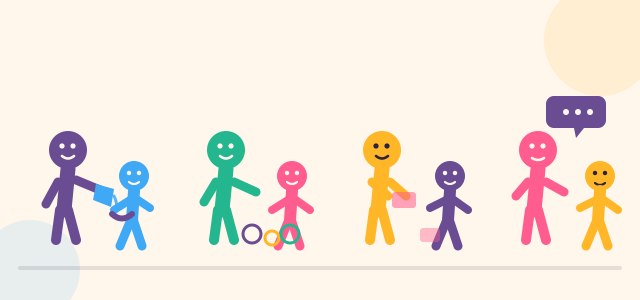
1. Talk far more than feels necessary
Toddlers build vocabulary from language aimed at them about things happening in front of them. Not background TV, not a nursery-rhyme playlist — you, narrating.
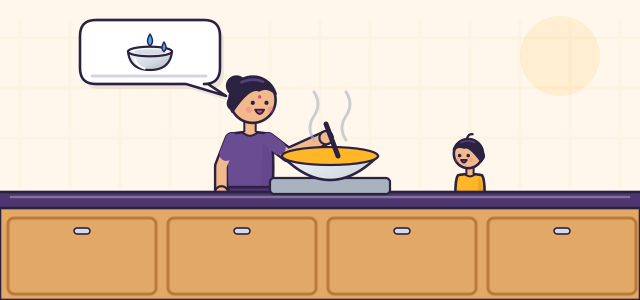
Say what you are doing while you do it. “I am putting the cold water in now.” “This cloth is wet, that one is dry.” It feels ridiculous for the first week and then it becomes automatic.
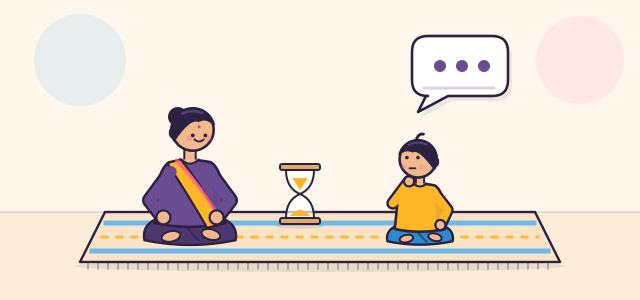
The other half is waiting. Ask something and leave a long, awkward gap. A two-year-old needs several seconds to assemble a reply, and most adults fill that gap before the child gets there.
2. A story every day
One book, every day, at roughly the same time. It does not have to be long and it does not have to be new — toddlers want the same book, which is boring for you and useful for them.
If you do not have books, tell stories. Telling counts. So does describing what happened at the market this morning as if it were an adventure.
3. Warmth and predictability
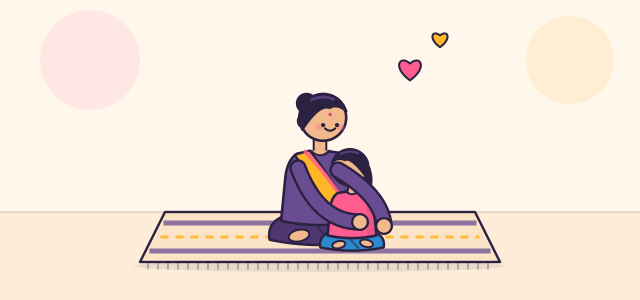
The confidence people describe as “a secure child” comes mostly from a simple pattern: the child gets upset, an adult comes, the upset ends. Repeated a few thousand times.
This is why routines matter more than rules at this age. Meals, naps and bedtime in a roughly predictable order tell a small child that the world is manageable.
You do not have to be calm every time. You have to come back — repair after you have snapped is doing the same work.
4. Free play — the kind you do not direct
Free play means the child decides what happens. They stack the katoris wrong, put the lid on the wrong bottle, tip the rice out deliberately. Resist fixing it.
That fumbling is the problem-solving. The moment you demonstrate the correct method, the activity becomes yours and the thinking stops.
Practical version: a small set of open-ended things within reach — bowls, lids, cloth, blocks, a tray — and a stretch of time where nobody suggests anything. Fifteen unstructured minutes beats an hour of guided activity.
5. Screens: less than you think, for real reasons
WHO’s guidance for this age group is blunt. For children aged one, screen time is not recommended at all. At two years, no more than one hour of sedentary screen time a day, and less is better.
The reason is not that screens are toxic. It is displacement. An hour on a screen is an hour not spent moving, being talked to, or handling real objects — and at this age those three are doing almost all the work.
The practical Indian-household version: video calls with grandparents do not count, a screen at mealtimes is the habit worth killing first, and the hour before bed should be clear. If you want the full plan for older children too, read the screen time article.
What this looks like tonight
You do not need all five today. Pick one:
- Bottle and lid play — 14 months and up
- Rice treasure hunt — 15 months and up
- Stack and crash tower — from 8 months
- Water painting on the wall — 2 years and up
Twenty minutes of full attention, most days. That is the whole method. There is no class that beats it and no app that replaces it.