The Story of Garba: What to Tell Your Child This Navratri
Why garba is danced in a circle, what the lamp in the pot means, how garba differs from dandiya, and what it can teach a child. Explained simply, with pictures to show them.
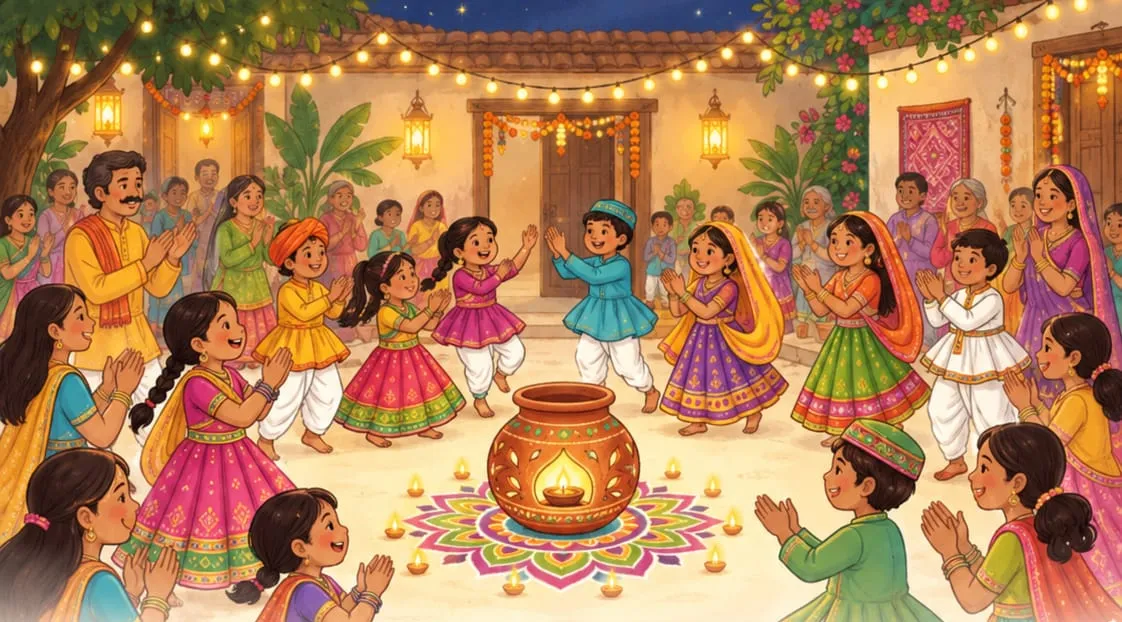
Every Navratri night, families in Gujarat and wherever Gujarati families live step into a big circle and dance garba. Children join in long before they know the steps. Sooner or later one of them asks: why do we dance like this?
Here are the answers, one picture at a time. Read a section, show the picture, and let your child ask the next question.
What does “garba” mean?
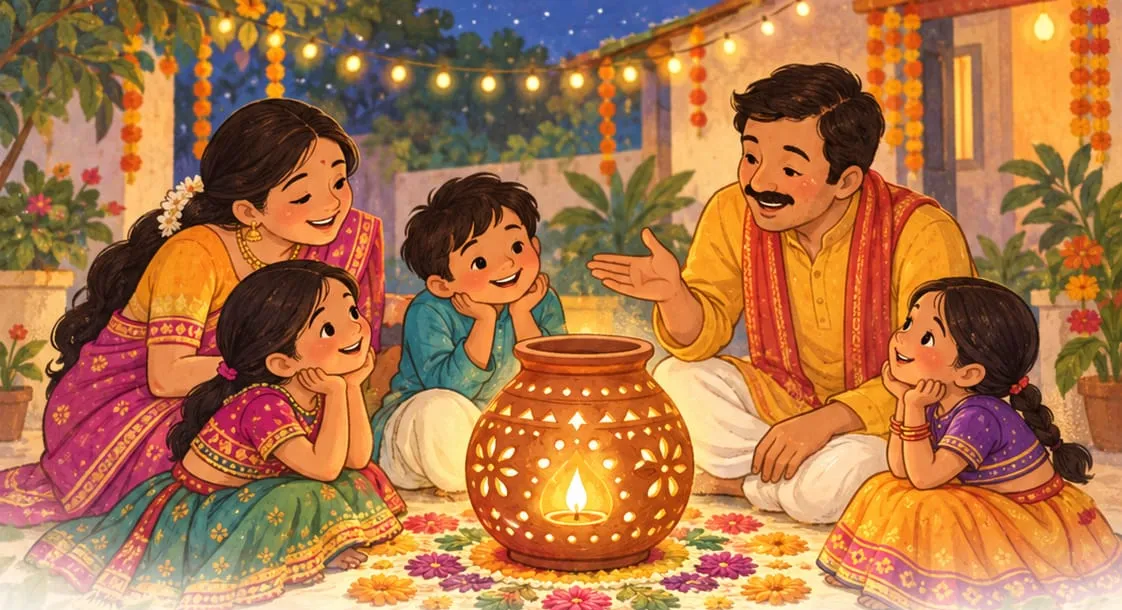
The word garba comes from the Sanskrit garbha, which means womb: the place where a baby grows before it is born.
In the middle of the dance stands a clay pot with holes in it and a small lamp burning inside. It is called the garbo, or the garbha deep, the lamp in the womb. Families often explain it like this: the light inside the pot is like a little life, growing and glowing inside its mother.
Ask your child: what do you think the lamp inside the pot is protected from?
Why do we dance in a circle?
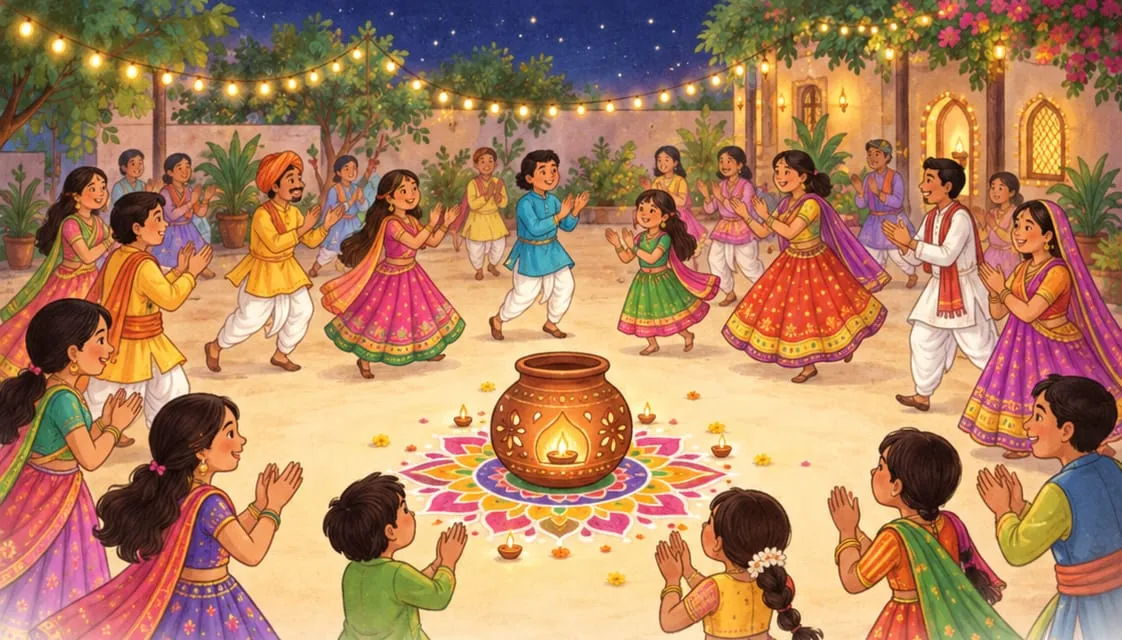
Garba moves round and round, and it never really starts or ends. Many families see the circle as a picture of how life moves in cycles: day becomes night and night becomes day again, a seed becomes a plant and the plant makes new seeds.
There is a simpler idea in it too, one a small child understands straight away. In a circle, nobody is first and nobody is last. Everyone dances around the same light.
Why is there a lamp in the middle?
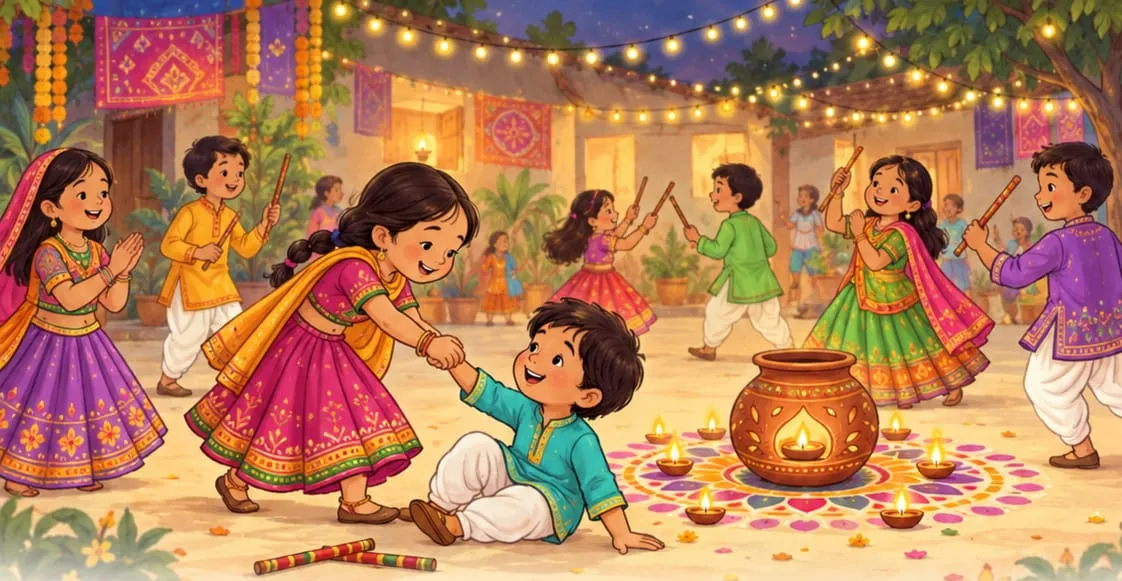
The lamp stands for life and light, and a lamp in the dark is one of the oldest signs of hope and goodness there is. Everyone dances around it, and nobody lets it go out.
It is also a lovely way to talk about kindness. One small light changes a whole dark room; one kind act can change somebody’s whole evening, like helping up a child who has fallen in the middle of the dance.
Ask: what is one kind thing you could do at garba tonight?
Why garba at Navratri?
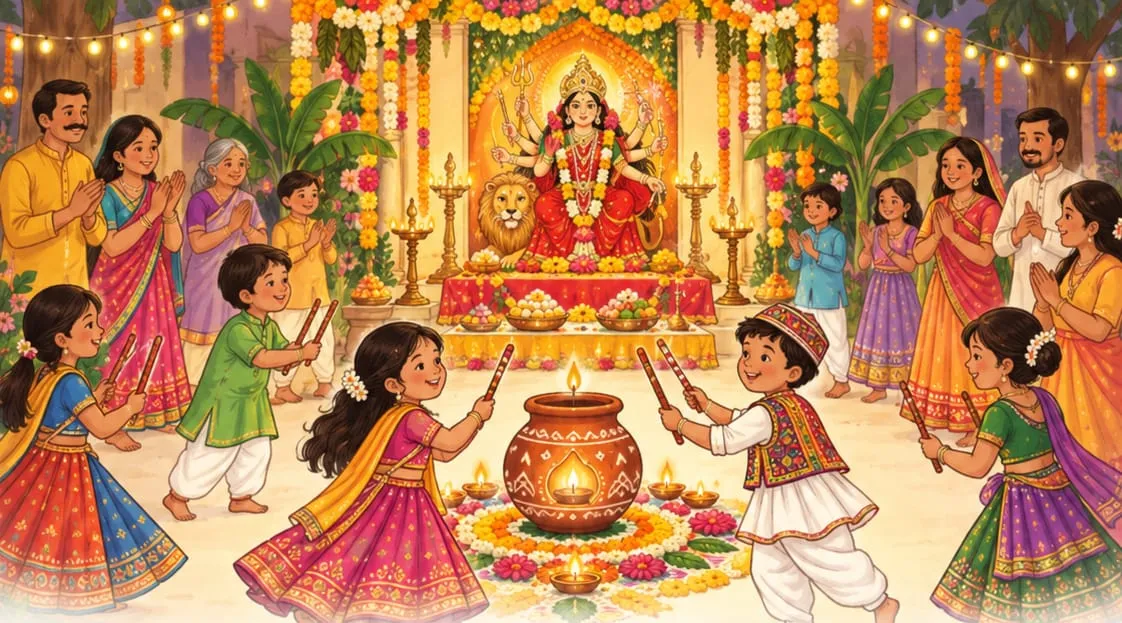
Navratri means nine nights. In these nine nights families honour the goddess Durga and her nine forms, one for each night. Garba is how Gujarat celebrates her: with music, with dancing, and with everyone together. It celebrates courage, love and the strength of goodness.
Garba or dandiya?
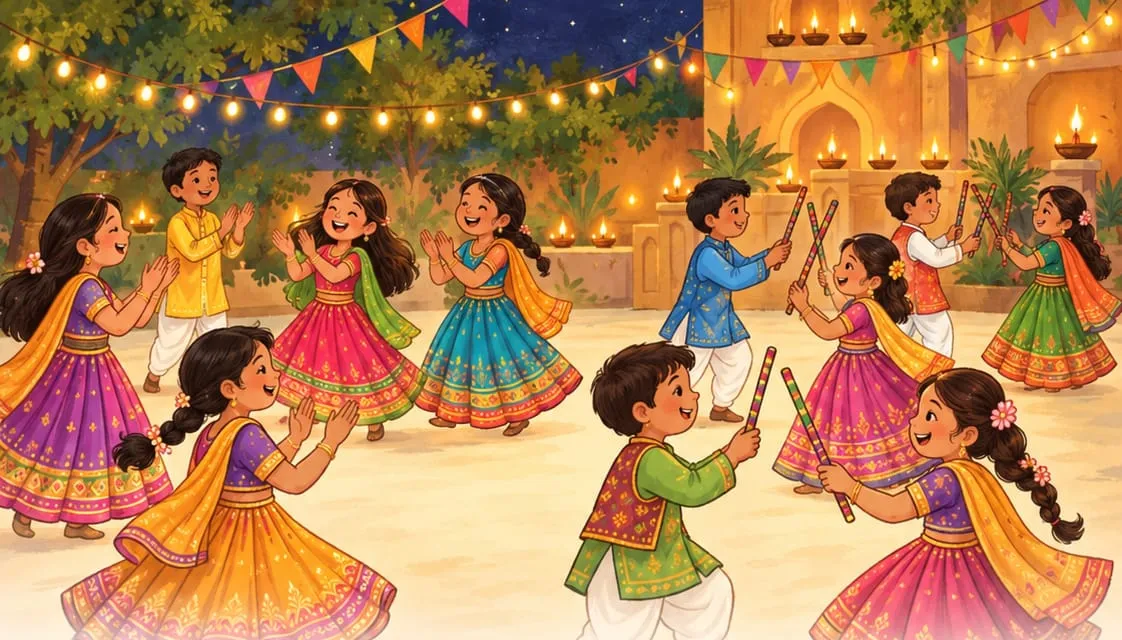
They are two dances, and most evenings have both.
- Garba: you clap and move round in the circle.
- Dandiya raas: you hold two short decorated sticks and tap them with a partner, then move on to the next partner.
Both bring music, joy and people together. Small children usually start with garba claps; the sticks come once they can keep a beat.
Why such colourful clothes?
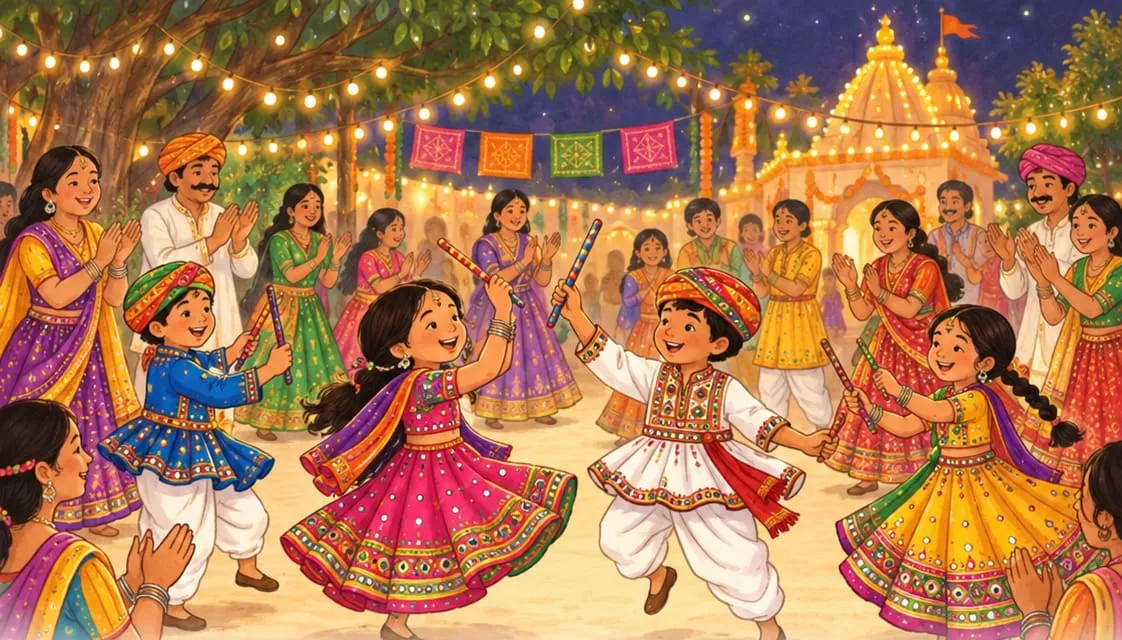
Girls wear a chaniya choli, a wide swirling skirt with a short blouse and a dupatta. Boys wear a kediyu, a short flared jacket, often with a turban. Both are covered in bright embroidery and tiny mirrors that catch the light as you spin. They show off the art and craft of Gujarat, and they are made for twirling.
What can garba teach a child?
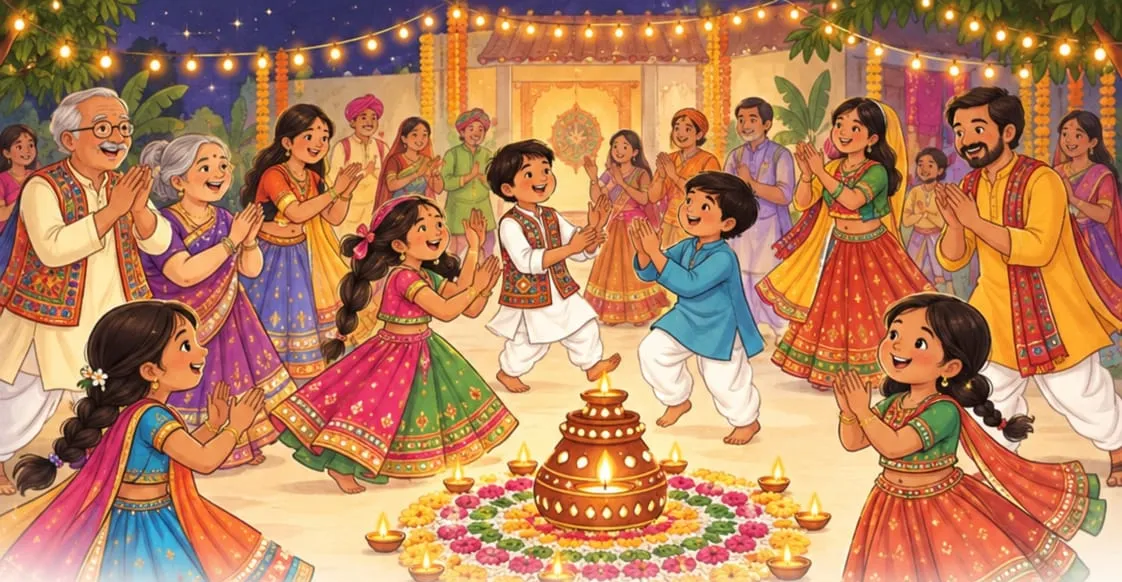
Five things, and you do not need to lecture any of them. They happen on their own, and you only have to notice them out loud.
- Togetherness: grandparents, parents and small children in the same circle.
- Confidence: trying a new step in front of everyone.
- Respect: making room in the circle for someone new.
- Joy: dancing just because it is fun.
- Gratitude: saying thank you for the good things in the year.
Ask at the end of the night: who did you dance with, and what was your favourite part?
Try this at home
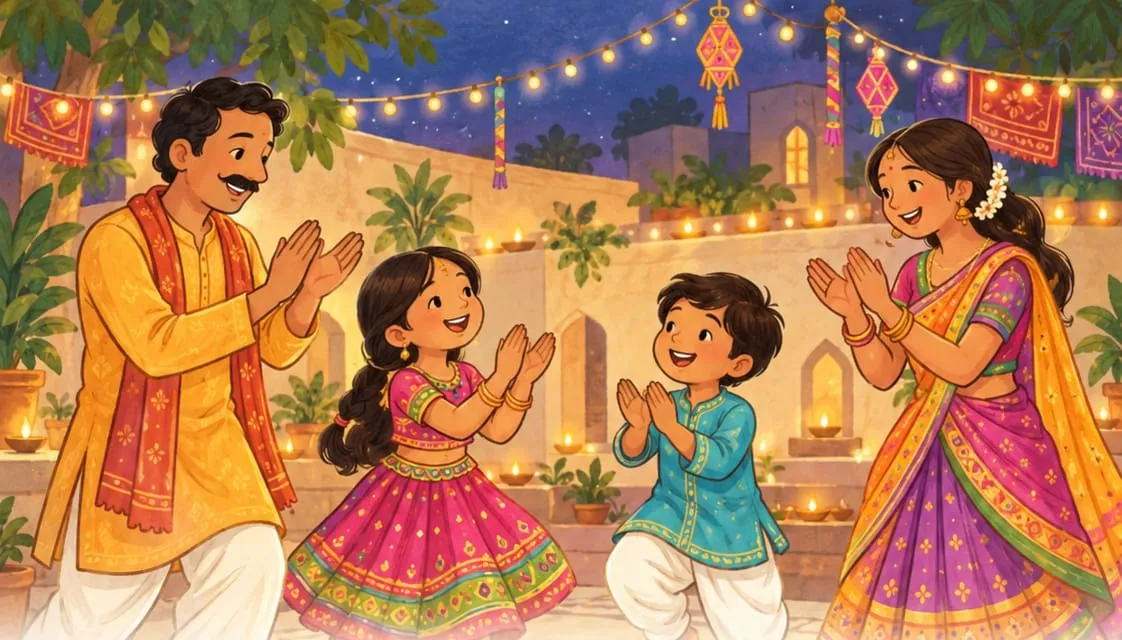
- Clap a simple beat together before you go out. Then clap the beats in words: gar · ba is two claps, dan · di · ya is three. Our free Clap the Beats game works the same way, in English, Hindi, Marathi and Gujarati.
- Make a mini garbo from a steel dabba with holes in the lid (an adult punches them) and a torch inside, never a candle. In a dark room it throws dots of light on the walls.
- Retell this page tomorrow, with your child telling you the answers.
A note on the meanings
The word garba coming from garbha, and the lamp standing for life, are the explanations most families and writers give. Like every tradition, garba means slightly different things to different families, and your family’s version is the one your child should hear.
The pictures on this page were made with Google Gemini and checked by us before publishing.