Speak Your Own Language at Home — It Helps English Too
Many Indian parents switch to shaky English at home hoping to give their child a head start. The research points the other way.
A question I get constantly: “Should we speak only English at home so she does well at school?”
It is asked with the best intentions, and the honest answer is no — and not for sentimental reasons about culture. For practical ones about how language actually develops.
Vocabulary transfers; awkwardness does not
Children build language on a foundation of concepts. A child who deeply understands what shy, jealous, slippery and nearly mean in Marathi has those concepts. Attaching English labels to them later is comparatively easy.
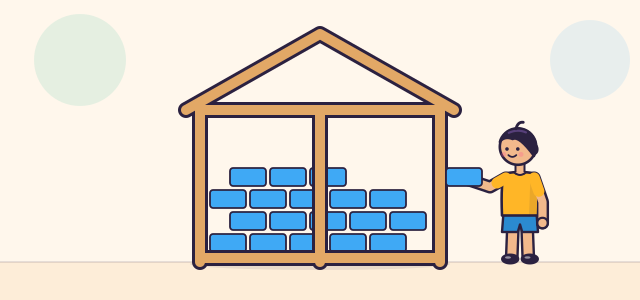
A child who only ever heard a smaller, more careful set of English words at home has fewer concepts to attach anything to. Fluency in the home language builds the frame; the second language fills in the wall.

Rich beats correct
The strongest thing a parent gives a young child is a lot of varied, playful, emotionally engaged talk. Jokes. Complaints. Stories about your own childhood. Arguments about who ate the last laddoo.
Most parents cannot do that in their second language. They become careful, simpler, quieter. The child ends up hearing less language, not more — and that trade goes the wrong way.
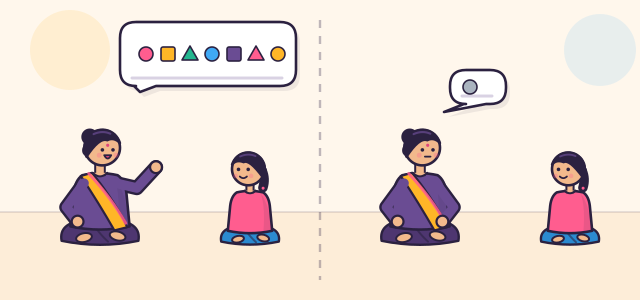
What this looks like in practice
Pick a language per person or per place. One parent speaks Gujarati, the other Hindi. Or home is Tamil and the shop is English. Children handle this easily; it is adults who find it confusing.
Do not translate every sentence. Say it once, properly, in the language you chose. Constant translation teaches a child that they only need to attend to the version they find easiest.
Read in both. Even ten minutes a day of a story book in your own language is doing real work. If you cannot find books, tell stories — telling counts.
Let mixing happen. Children mix languages in one sentence for a while. It is not confusion; it is a normal stage, and it sorts itself out.

English still needs to be there
None of this means avoiding English. It means not sacrificing depth in the home language to get it. English will come from school, from books, from the world. Your mother tongue will only come from you.
Try the three-object story tonight — in whichever language makes you funniest. That is the one your child learns most from.